

Passive Thermal Protection for Battery Safety
From inter-cell barriers to battery enclosure insulation, Skogar® aerogel sheets help delay thermal runaway propagation, protect surrounding structures and support pack-level survivability during battery failure events — across ESS, high-performance mobility, aerospace and defense applications.
The challenge
A single cell failure can rapidly escalate into a pack-level thermal event.
Thermal runaway propagation remains one of the primary safety challenges in lithium-ion battery systems. When a cell fails, the heat released can trigger adjacent cells, creating a cascading thermal event that becomes increasingly difficult to contain once propagation begins.
At the same time, battery manufacturers continue pushing toward higher energy density and tighter packaging. The result is less available space for thermal barriers — increasing the demand for ultra-thin, lightweight, and reliable insulation materials.
How Skogar® helps
Ultra-thin aerogel insulation for thermal propagation control.
Inter-cell thermal barriers
Placed between cells or modules, Skogar® sheets help reduce heat transfer from a failing cell to adjacent cells, delaying thermal propagation inside the pack. Available from just 0.5 mm with thermal conductivity down to 0.012 W/(m·K) according to EN 12667, they combine high thermal insulation with minimal space impact — supporting energy-density optimization from modular packs to CTP, CTB and CTC architectures.
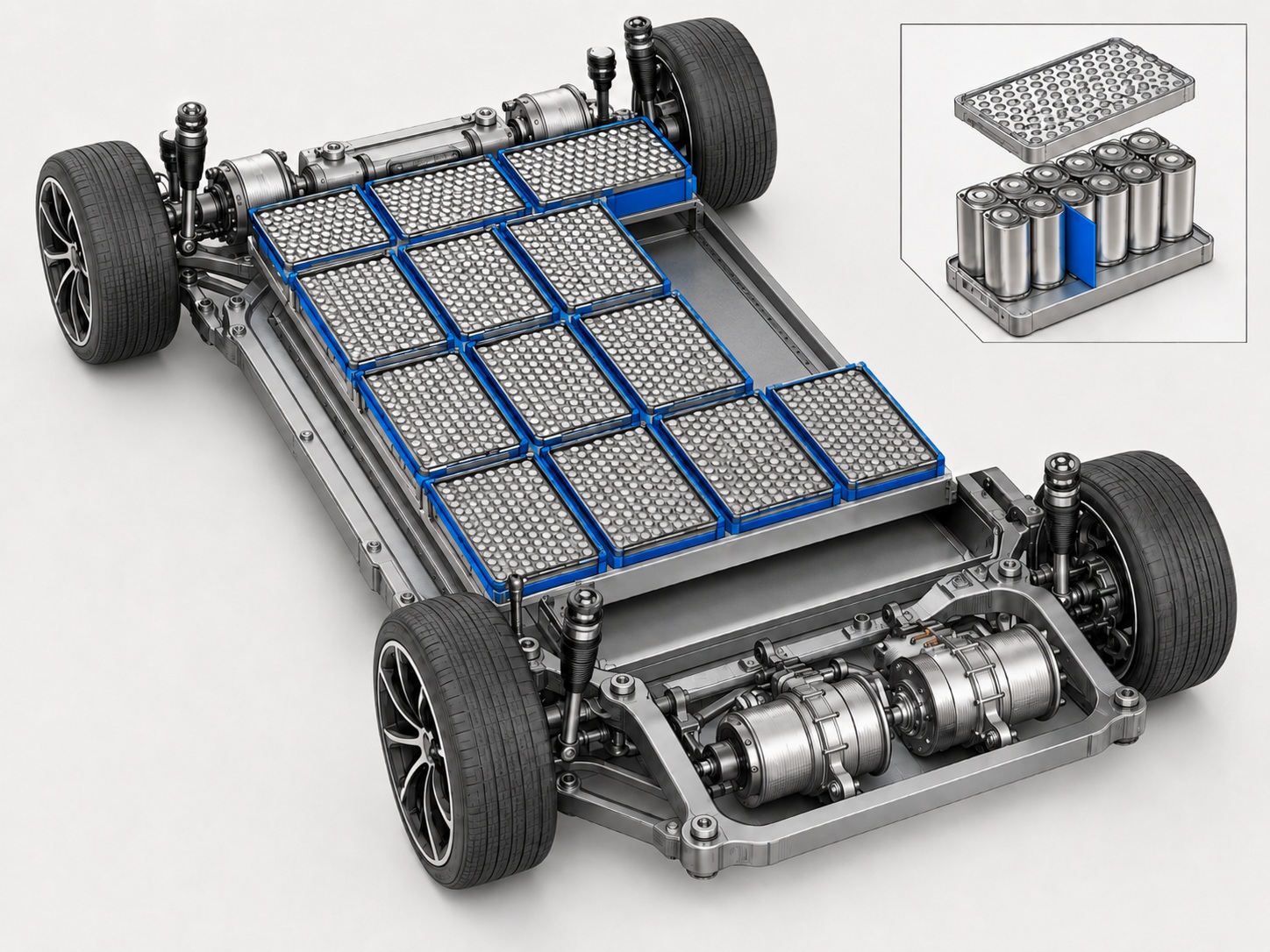
Battery enclosure & venting path protection
Applied to battery enclosures, surrounding structures, gas venting ducts and sealing interfaces, Skogar® provides passive thermal protection and flame resistance during battery failure events. By helping shield occupied areas, sensitive components and external structures from extreme heat, flames and particles, it supports fire containment, safer venting path design and evacuation time in EV, aerospace, marine and industrial systems.
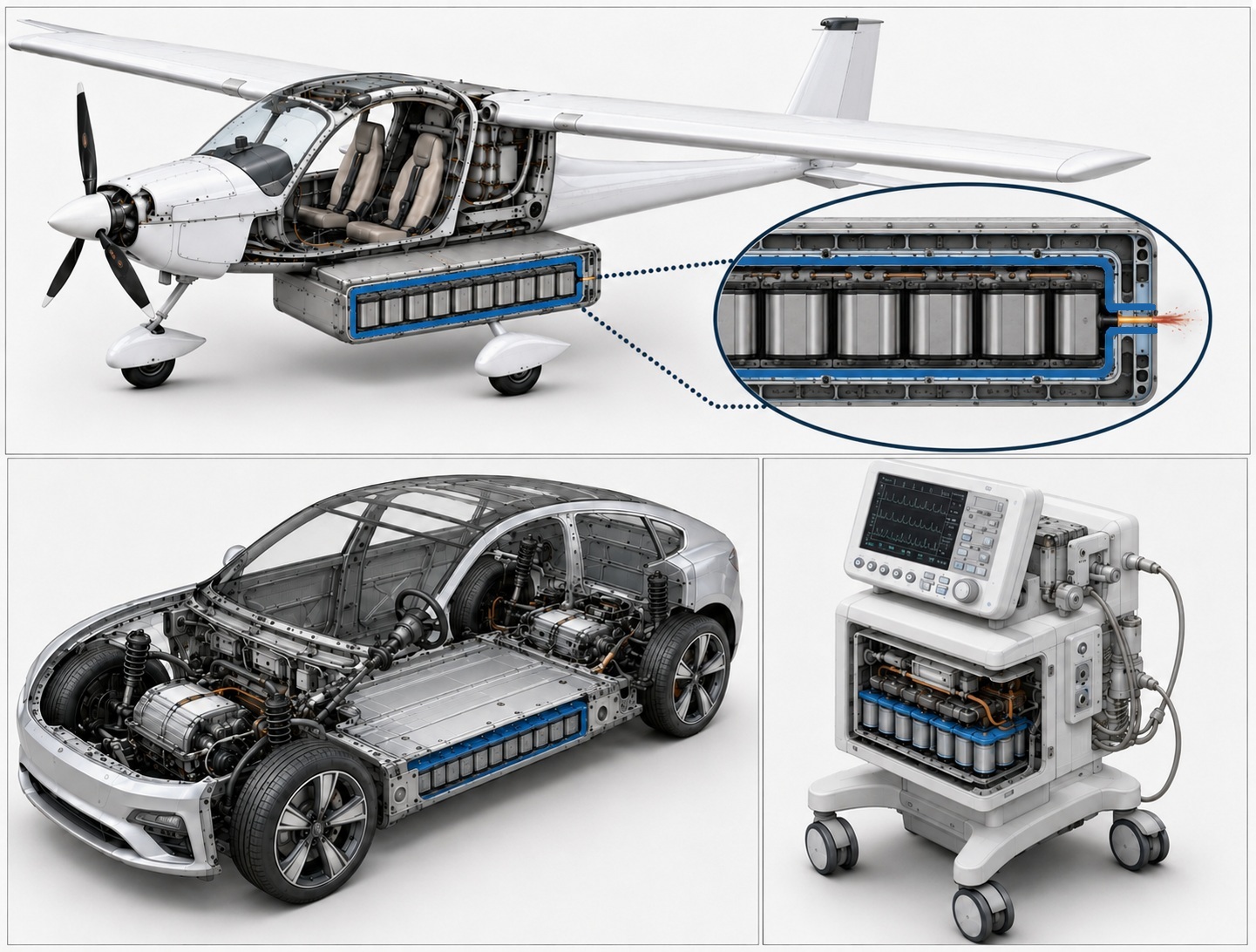
Why battery engineers choose Skogar®
From 0.012 W/(m·K)
Very low thermal conductivity for thin battery barriers and enclosure insulation.
From 0.5 mm
Ultra-thin formats help preserve usable pack volume while integrating thermal protection.
Flame-resistant and stable
UL94 V-0 rated. Selected grades supporting exposure up to 1700 °C. Low smoke behavior and no melting.
Ready to integrate
Available as flexible or rigid blankets, die-cut parts, laminated assemblies, or adhesive-backed formats.
Recommended grades for battery applications
Skogar® ST is typically selected for ultra-thin inter-cell barriers, while Skogar® HT is preferred for flexible insulation and higher temperature exposure.
Skogar® ST ★
Most common for battery barriers
Rigid glass-fiber substrate. Thicknesses from 0.5 mm. Thermal conductivity from 0.012 W/(m·K). Suitable for compact inter-cell thermal barriers and module insulation.
Skogar® HT
For flexible and higher-temperature insulation
Flexible preox-fiber substrate. Thicknesses from 2 mm. Thermal conductivity from 0.012 W/(m·K). Adapted to enclosure insulation, curved geometries, and demanding thermal environments.
Not sure which grade?
We help you choose
Cell chemistry, module design, operating temperature, mechanical constraints — our engineering team helps you select and qualify the right Skogar® grade for your specific battery architecture.
Applications
Electric vehicles
Inter-cell barriers and enclosure insulation for passenger vehicles, commercial EVs, buses, and heavy-duty battery systems.
Electric & hybrid aircraft
Lightweight thermal insulation solutions for eVTOL and hybrid-electric propulsion systems where flame resistance and thermal protection are critical.
Energy storage systems
Thermal barriers for stationary battery storage systems, marine batteries, offshore platforms, and critical infrastructure.
Evaluating thermal barriers for your battery platform?
Enersens supports battery manufacturers and integrators with material selection, application-specific thermal assessments, and qualification samples.