

Thermal Protection for Space Missions
From lunar surface operations to atmospheric re-entry — silica aerogel composites engineered for the most extreme thermal environments beyond Earth.
The challenge
In space, thermal extremes are the norm — and every gram is a cost driver.
Space systems operate across a thermal range that no terrestrial application demands. A lunar rover must survive −180 °C lunar nights and +130 °C surface exposure. A re-entry vehicle may transition from the cold vacuum of space to surface temperatures exceeding 1500 °C within minutes. Launchers combine cryogenic propellant zones with extreme exhaust heat — in adjacent structures.
The thermal protection material must perform across this entire range, remain stable under vacuum, withstand radiation, and contribute as little mass as possible to the system.
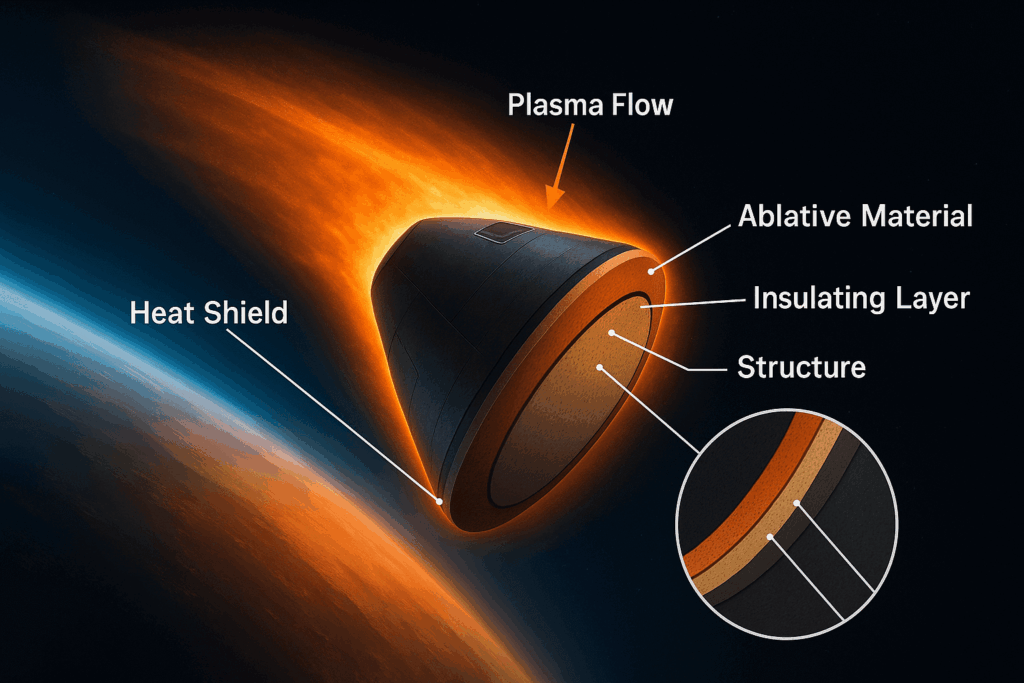
Atmospheric re-entry shields
Skogar® UHT withstands short-time exposure up to 1700 °C — providing thermal insulation during the extreme heat phase of atmospheric re-entry. Non-flammable by nature, ultra-lightweight, and available in custom shapes for integration into re-entry vehicle structures.
Satellites & platforms
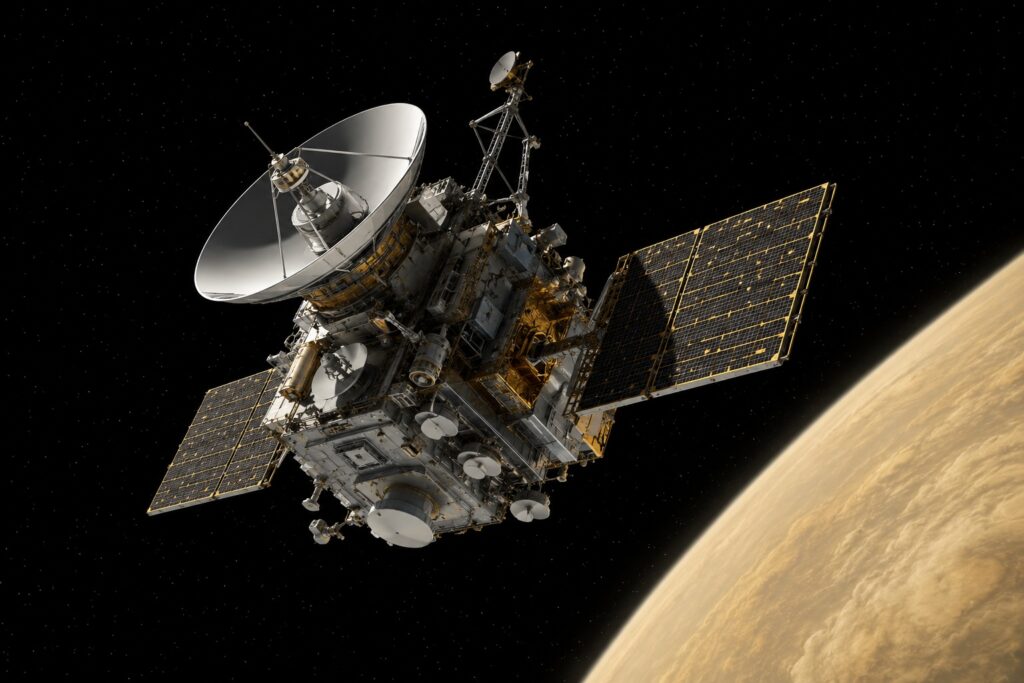
Satellite electronics, transponders, and batteries face extreme thermal cycling between sunlit and shadowed orbital phases. Skogar® provides multi-layer thermal insulation that is vacuum-stable, radiation-resistant, and contributes minimal mass to the platform budget.
Launcher thermal protection
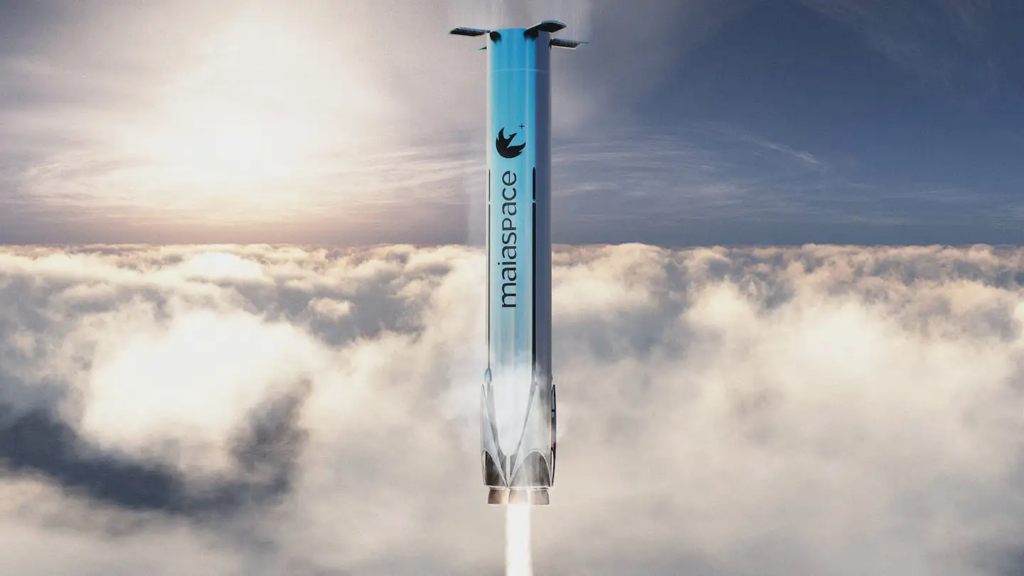
Launch vehicles combine cryogenic propellant tanks with extreme exhaust heat in adjacent structures. Skogar® provides thermal insulation across this full range — from −195 °C cryogenic zones to +1700 °C short-time flame exposure — in a single material family.
Lunar & planetary rovers
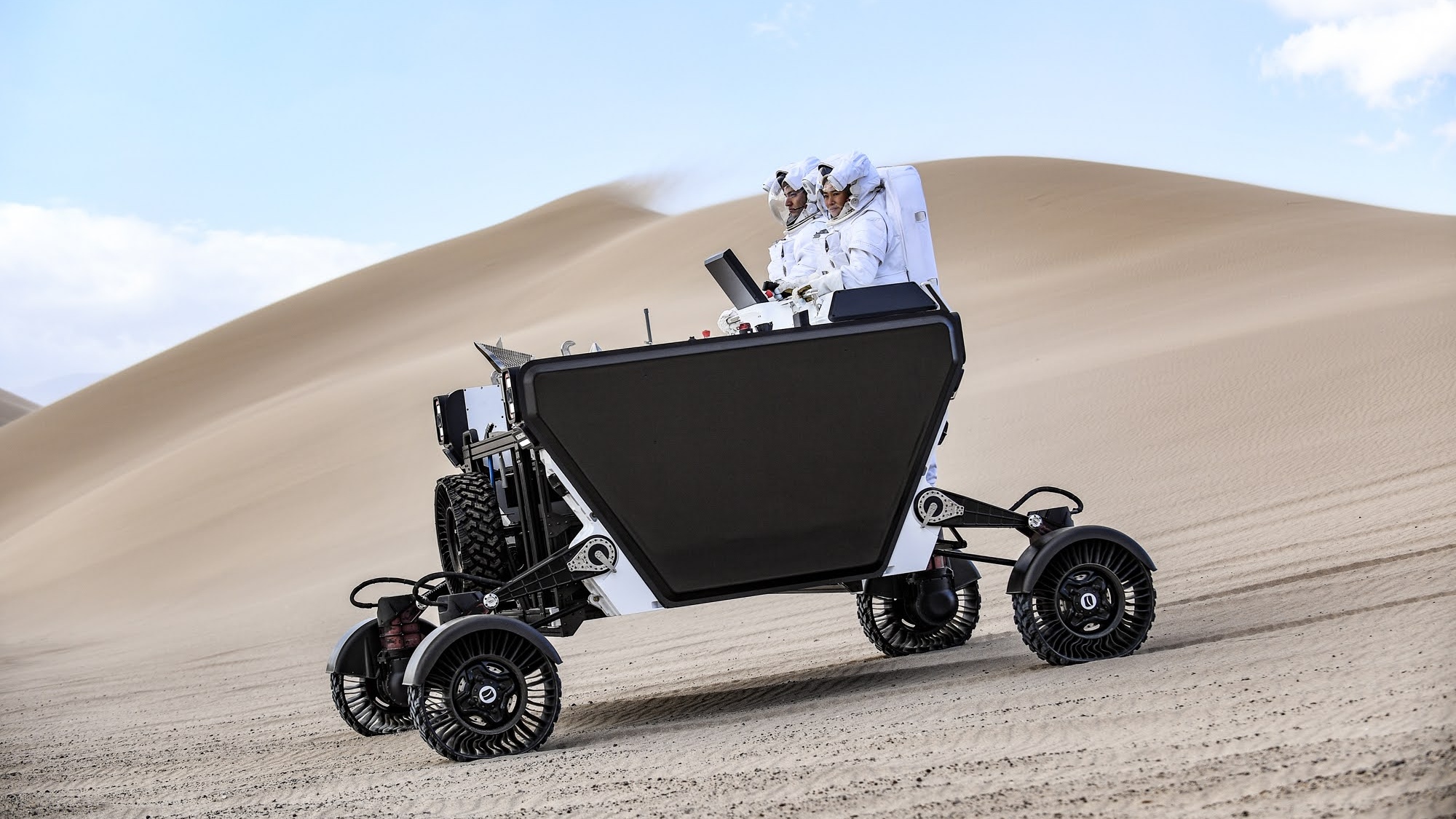
On the lunar surface, thermal cycling between −180 °C and +130 °C is relentless. Skogar® protects electronics, batteries, and sensitive instruments with a thermal conductivity as low as 0.012 W/(m·K) — in sheets as thin as 0.5 mm, minimising mass impact on the rover platform.
Why space engineers choose Skogar®
−195 °C to +1700 °C
Full cryogenic-to-extreme-heat range covered by a single material family. Simplifies system design and qualification.
Vacuum & radiation stable
Mineral composition ensures stability under vacuum, UV exposure, and many radiation environments. No organic binders to degrade over mission lifetime.
Ultra-lightweight
From 130 kg/m³ and 0.5 mm thick. Every gram saved on thermal protection is a gram available for payload or mission duration.
Recommended grades for space applications
Space missions span the full Skogar® range. Grade selection depends on the thermal environment, mechanical constraints, and mission profile.
Skogar® ST
Electronics & instrument protection
Rigid, from 0.5 mm. Ideal for insulating electronics bays, battery compartments, and sensitive instruments on satellites and rovers. 0.012 W/(m·K) — exceptional insulation at minimal mass.
Skogar® HT
Flexible thermal barriers, complex geometries
Flexible preox-fiber substrate. From 2.0 mm. Conforms to curved surfaces on spacecraft and rover structures. Up to 1300 °C short-time exposure. FAR 25.853 certified.
Skogar® VHT & UHT ★
Re-entry shields, exhaust zones, extreme heat
Semi-rigid, silica or ceramic fiber substrate. VHT up to 1400 °C (2.0/3.0 mm), UHT up to 1700 °C (4.5/6.5 mm). The grades for atmospheric re-entry and launcher propulsion zones.
Mission profiles
Launch vehicles
Cryogenic tank insulation, inter-stage thermal barriers, and exhaust zone protection. One material family addressing both cold and hot zones of the launcher.
Satellites & platforms
Multi-layer insulation for satellite electronics, solar panel substrates, and antenna thermal management. Vacuum-stable, radiation-resistant, ultra-lightweight.
Atmospheric re-entry vehicles
Thermal shielding for cargo and crewed re-entry capsules. Skogar® UHT protects underlying structures during the peak heat phase of descent.
Luna, Mars, Venus…
Wherever you’re heading, don’t forget your Skogar®! Thermal protection for rover platforms, habitat modules, and instrument bays operating through extreme planetary thermal cycling.
Custom mission requirements
Specific thermal environment, outgassing requirements, or integration constraints? Our engineering team helps you qualify Skogar® for your mission profile.
Designing thermal protection for a space mission?
Our engineering team supports grade selection, thermal simulation data, qualification support for vacuum compatibility and outgassing requirements and sample delivery.